
Short answer: pick one recovery tool to use after hard sessions, one for rest days, and one you can do in under fifteen minutes when you are short on time. Attach each one to a gym visit you are already making. That is the entire system, and it beats an ambitious plan you abandon in two weeks.
Recovery has a marketing problem. Every tool gets sold as essential, which leaves people either doing none of it or trying to do all of it. Both versions fail for the same reason: no plan.
Here is a practical way to build a recovery routine around the training you are already doing, using the tools sitting on our floor in Allied Gardens.
Start with your training week, not the tools
Before picking anything, answer three questions:
- How many hard sessions do you have a week? Two heavy lifts and a HIIT class is a different load than five easy gym visits.
- Where does the soreness show up? Legs from squats and running behave differently than shoulders from pressing.
- How much time will you realistically give it? Be honest. Fifteen minutes you actually take beats forty-five you skip.
Recovery is an input like sleep or food. It works because it is repeatable, not because any single session is magic.
What each tool is good for
| Tool | Time | Best slot in your week |
|---|---|---|
| Cold plunge | 2–5 min | After hard training, or paired with sauna for contrast |
| Infrared sauna | 15–30 min | End of a session when you have time to shower |
| Contrast therapy | 20–30 min | Dedicated recovery day, or after your hardest session |
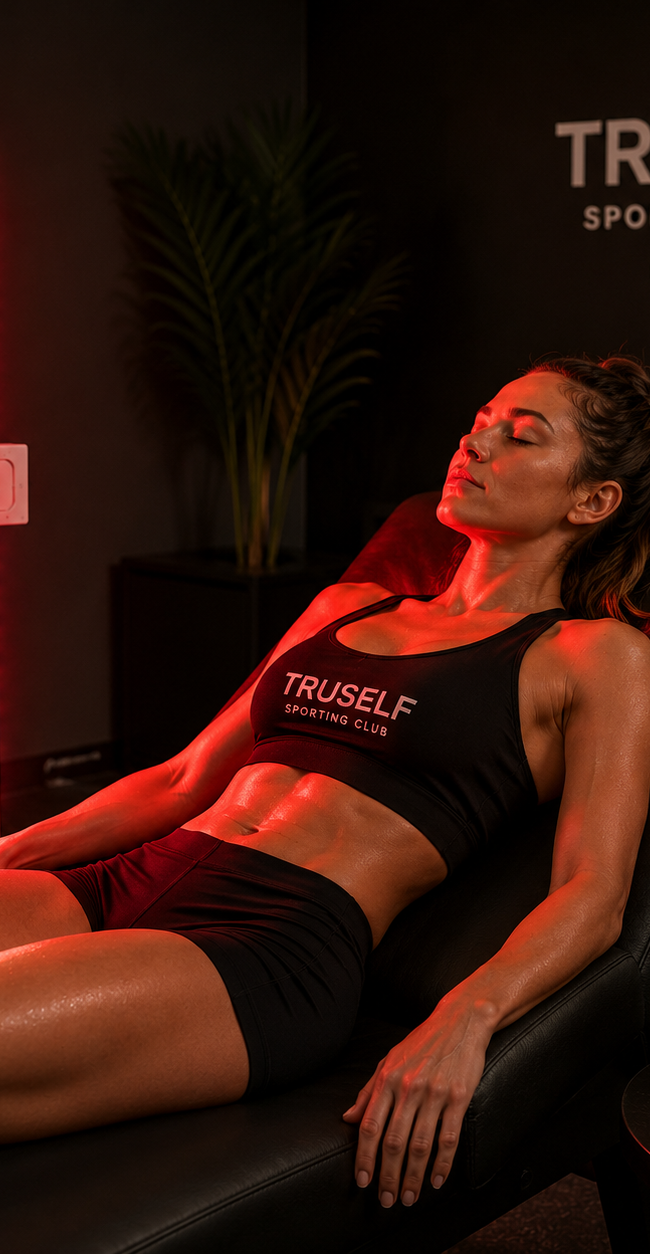
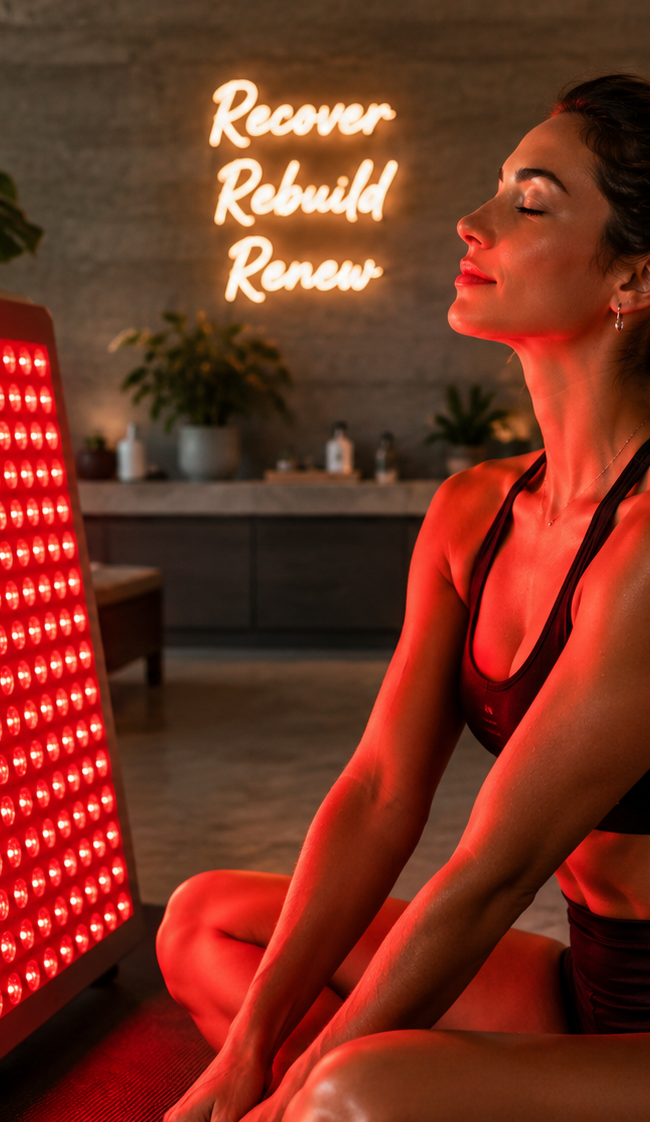
| Red light therapy | Up to 45 min | Rest days, or when you cannot get hot or sweaty |
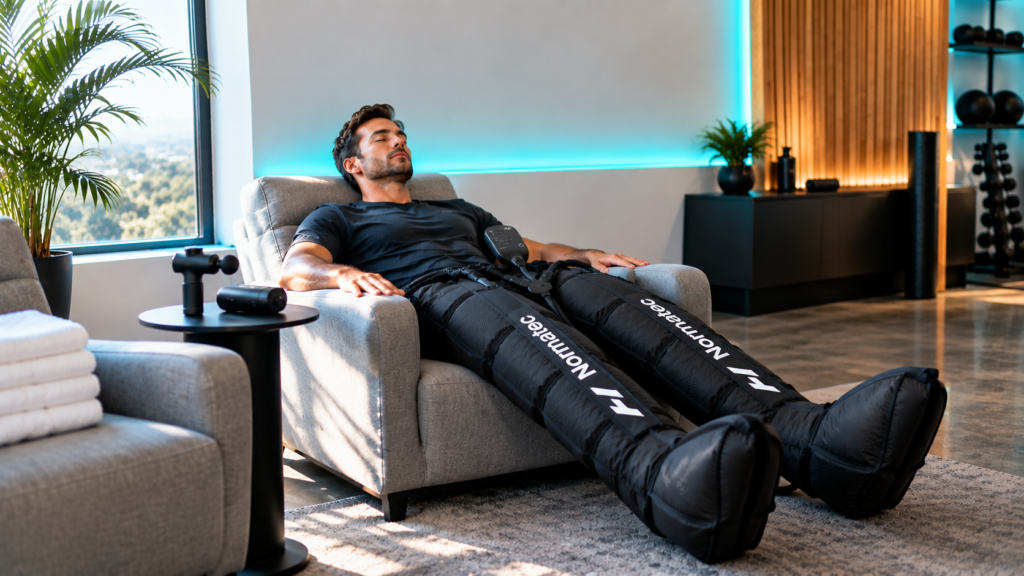
| Compression boots | 15–20 min | Legs-heavy days: squats, running, cycling |

Three routines that actually hold up
The minimalist: two touchpoints a week
If you train two or three times a week and want the simplest possible plan:
- After your hardest session: 15 minutes in the sauna, or 3 minutes in the plunge if you are short on time
- One rest day: 20 minutes of compression boots while you answer email
Total commitment: about 35 minutes a week, both attached to visits you were making anyway.
The lifter: built around leg days
Training four or five times a week with real intensity:
- Post-lift, upper body days: sauna, 15–20 minutes
- Post-lift, leg days: compression boots, then plunge
- One rest day: red light therapy, since there is no heat load and no shower afterward
- Weekend: full contrast round if you have the time
The busy professional: fifteen minutes, no shower
If you are coming from work or heading back to it:
- Two or three times a week: red light therapy after your session. No sweating, no shower, no change of clothes.
- Once a week: compression boots while you take calls
How to sequence them in one visit
If you are stacking several tools after a session, a reasonable order is:
- Train.
- Compression boots while your heart rate comes down.
- Contrast work: sauna, then plunge, repeated if you like. Finish on cold or hot, whichever you prefer — people argue about this more than the evidence supports.
- Red light therapy last, since it needs no cool-down and leaves you dressed and dry.
This is a sequence that works logistically, not a prescription. Research into recovery modalities is ongoing and individual responses vary. If you have a medical condition, are pregnant, or take medications affected by heat or light exposure, talk with a qualified healthcare professional before adding any of these.
The mistake that kills most recovery routines
Making recovery a separate trip.
A plan that requires driving to a recovery studio on Tuesday and Thursday survives about three weeks. A plan where the plunge is forty feet from the squat rack survives indefinitely, because it costs you nothing extra.
That is the practical argument for having recovery inside your gym rather than as a second membership somewhere else: not that the tools are better, but that you will actually use them.
Everything in one building
Cold plunge, infrared sauna, contrast therapy, red light therapy, and the Hyperice Recovery Room are all on the floor at TruSelf Sporting Club in Allied Gardens, on one membership. Try the club for three days and build your routine before you commit.