
Red Light Therapy vs Infrared Sauna: What’s the Difference?
Short answer: an infrared sauna heats your body to raise your core temperature and make you sweat. Red light therapy uses red and near-infrared LED light on the skin with no meaningful heat and no sweating. They feel completely different, they are used for different reasons, and plenty of people use both in the same visit.
If you have been reading about recovery, you have probably seen red light therapy and infrared saunas mentioned in the same breath. Both use the word “infrared.” Both show up in gyms and recovery studios. And both get described with the same vague promises.
They are not the same thing. Here is a straightforward comparison of what each one actually does, what a session is like, and how members at our gym in Allied Gardens use them.
What is an infrared sauna?
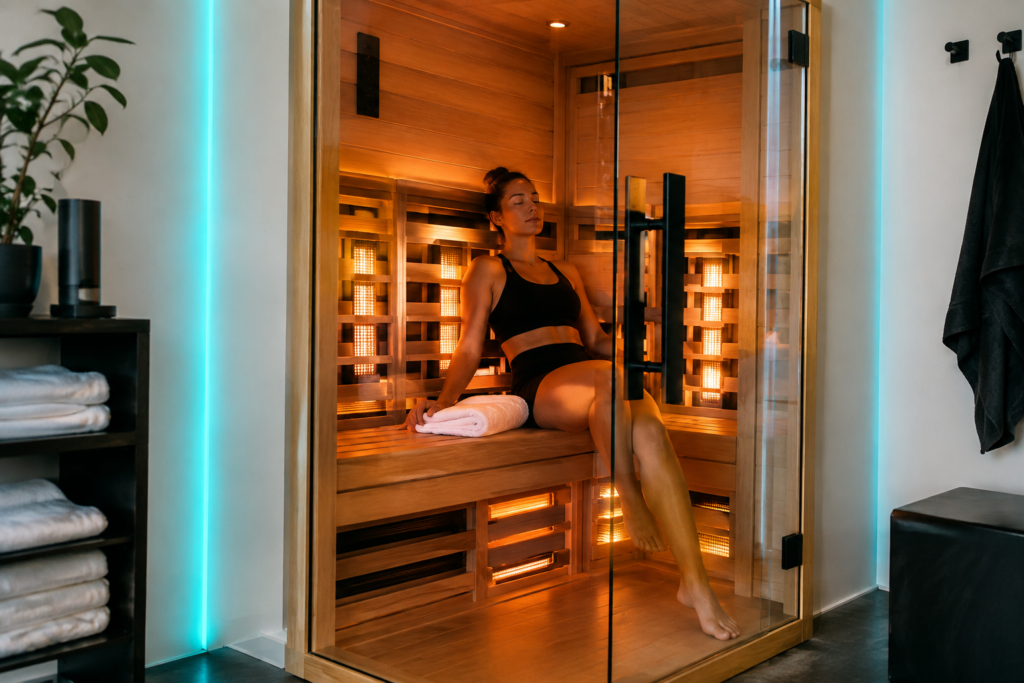
An infrared sauna uses infrared heaters to warm your body directly rather than heating the air around you the way a traditional sauna does. The cabin runs cooler than a traditional sauna, usually somewhere between 120°F and 150°F, but you still get hot and you still sweat.
The experience is what you would expect from a sauna: a warm wooden cabin, a bench, a towel, and fifteen to thirty minutes of sitting in the heat. You will want water before and after, and most people shower afterward.
What is red light therapy?
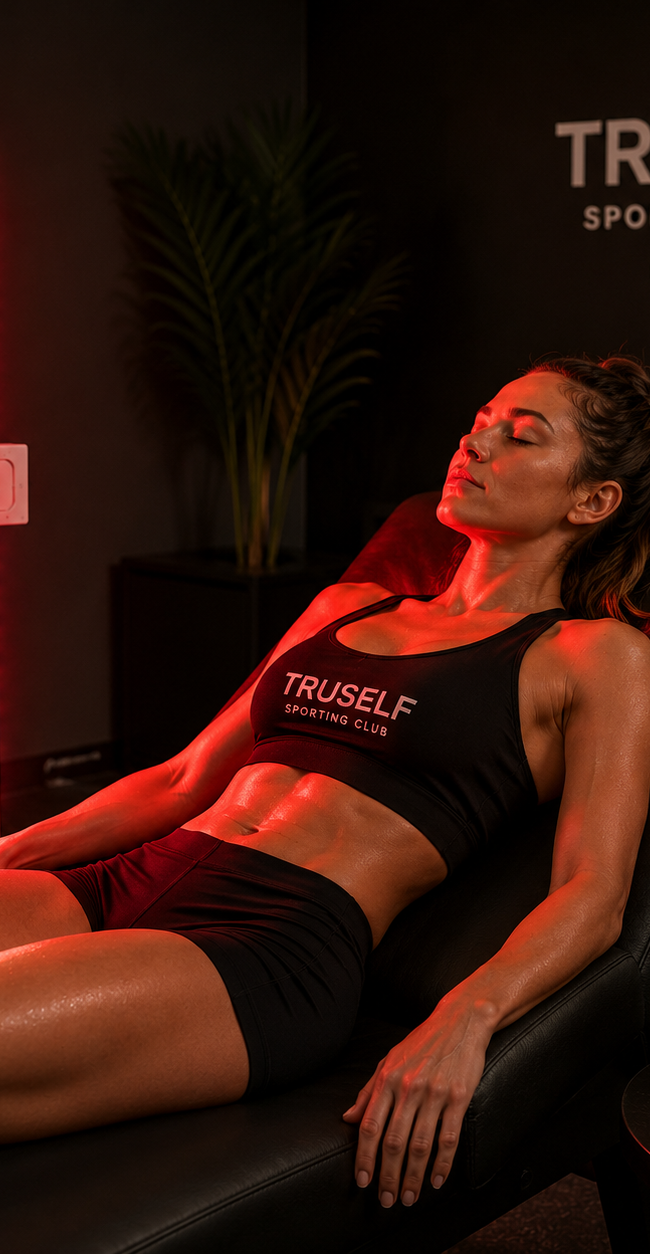
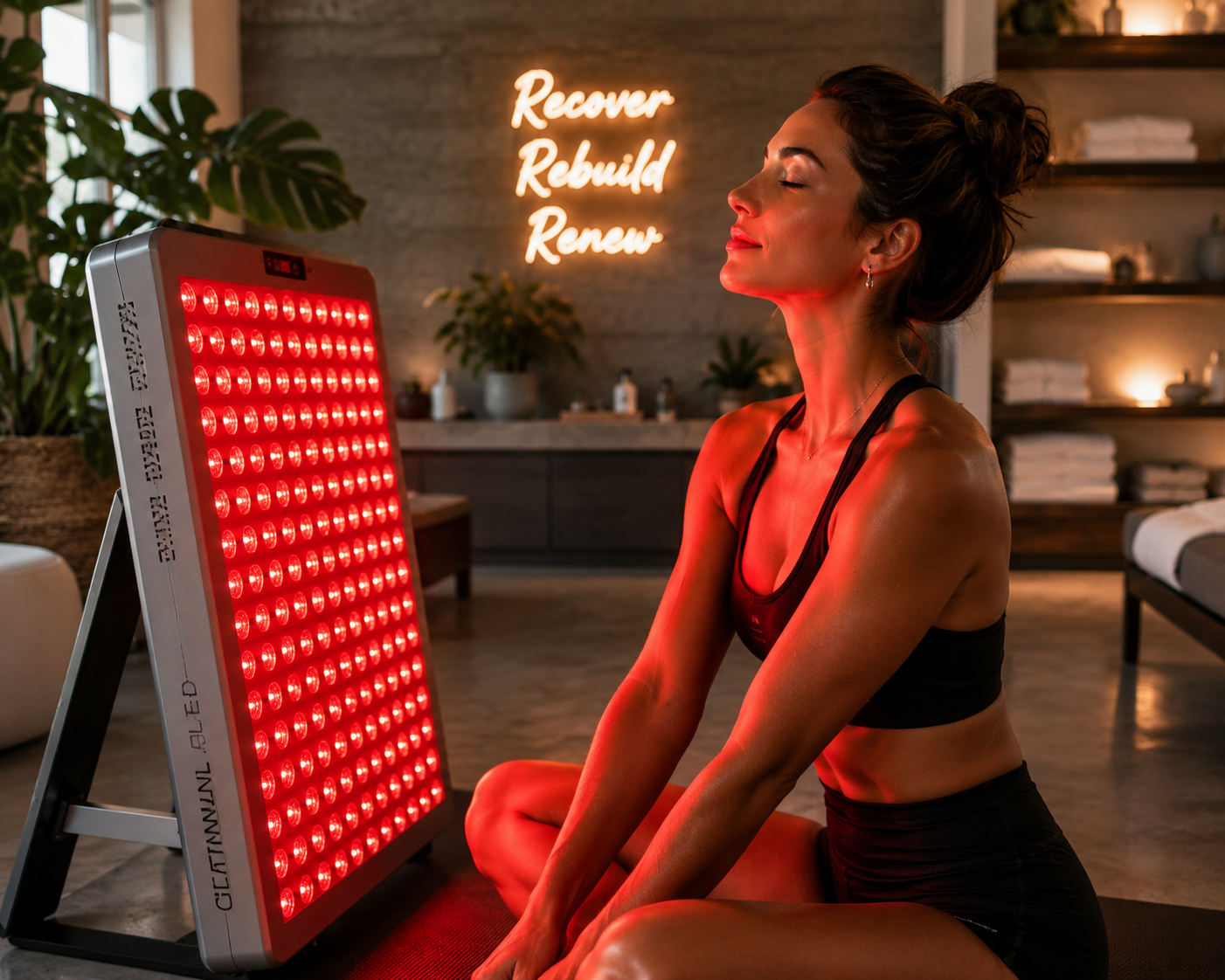
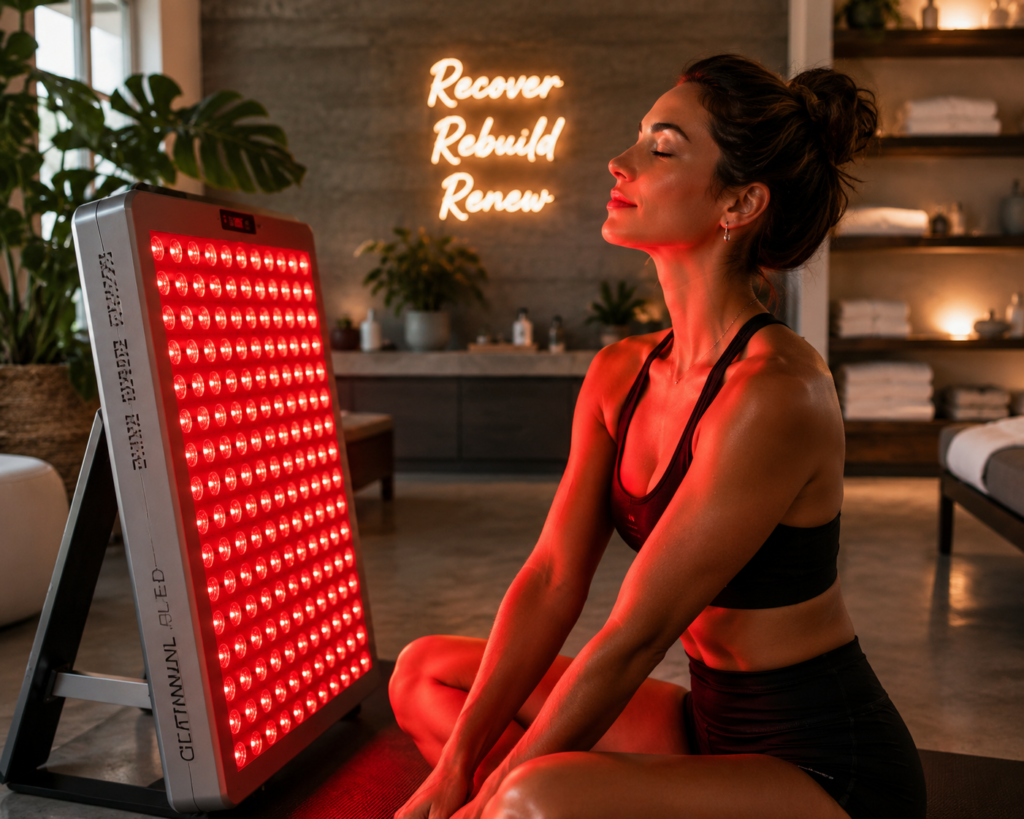
Red light therapy, sometimes called photobiomodulation or low-level light therapy, uses LED panels that emit red and near-infrared wavelengths onto the skin. There is no UV, and there is no meaningful heat. You sit or lie in front of a panel for your session, and that is the whole thing.
You stay dressed in whatever you trained in, and more exposed skin simply means more of you receives the light. It feels warm and bright rather than hot. Most people put on a podcast or sit quietly. There is no shower needed afterward, which is why it fits easily into a lunch break or the ten minutes before you leave the gym.
Red light therapy vs infrared sauna, side by side
| Infrared sauna | Red light therapy | |
|---|---|---|
| How it works | Infrared heaters warm the body directly | LED panels emit red and near-infrared light onto the skin |
| Heat | Yes, typically 120–150°F | Minimal; it feels warm, not hot |
| Do you sweat? | Yes, a lot | No |
| Typical session | 15–30 minutes | Up to 45 minutes at TruSelf |
| What to wear | Swimsuit or light clothing, plus a towel | Whatever you trained in |
| Shower afterward? | Usually | Not needed |
| Eye protection | Not required | Recommended; do not stare into the panel |
| UV exposure | None | None |
Do they do the same thing?
No, and this is where a lot of marketing gets sloppy.
Heat exposure and light exposure are different inputs to the body. Research into both is ongoing, results vary from person to person, and we are a gym, not a medical provider, so we are not going to tell you what either one will do for your body. What we can tell you is how they feel and how people fit them into a week of training.
The sauna is a heat session. It is passive, it is hot, and most people find it relaxing in the same way a long hot shower is relaxing. Red light is a quiet, low-effort session with no heat load at all, which makes it easy to do on days when you do not want to be hot or sweaty.
Which should you choose?
Pick the infrared sauna if…
- You like heat and you want to sweat
- You are pairing it with a cold plunge for contrast work
- You have time to shower and change afterward
- You are winding down at the end of a session and want twenty quiet minutes
Pick red light therapy if…
- You do not want to get hot or sweaty
- You are heading back to work or out the door right after
- You want something low-effort on a rest day
- Heat is uncomfortable for you, or you simply do not enjoy saunas

Or do both
This is what most of our members actually do. There is no rule that says you pick one. A common pattern looks like: train, plunge, sauna, then finish under the red light panel before heading home. Others use the sauna on training days and red light on rest days.
Try both in one visit
At TruSelf Sporting Club in Allied Gardens, infrared sauna, cold plunge, contrast therapy, red light therapy, and the Hyperice Recovery Room are all in the same building on one membership. No second studio, no per-session fees, no driving across town.
Safety basics for both
Infrared sauna: hydrate before and after, start with shorter sessions until you know how you respond, and get out if you feel lightheaded.
Red light therapy: follow the posted session guidelines, do not look directly into the panel, and wear protective eyewear. Bring your own or pick up a pair at the front desk.
For both: talk with a qualified healthcare professional first if you have a medical condition, are pregnant or may be pregnant, take medications that increase light or heat sensitivity, or are unsure whether either is appropriate for you. These are wellness amenities, not medical treatment, and nothing here is intended to diagnose, treat, cure, or prevent any disease or condition.